
天梯
Chinese scientists develop electrode coating to address signal loss and tissue adhesion problems in long-term brain-computer interface implantation_我的网站

一 |
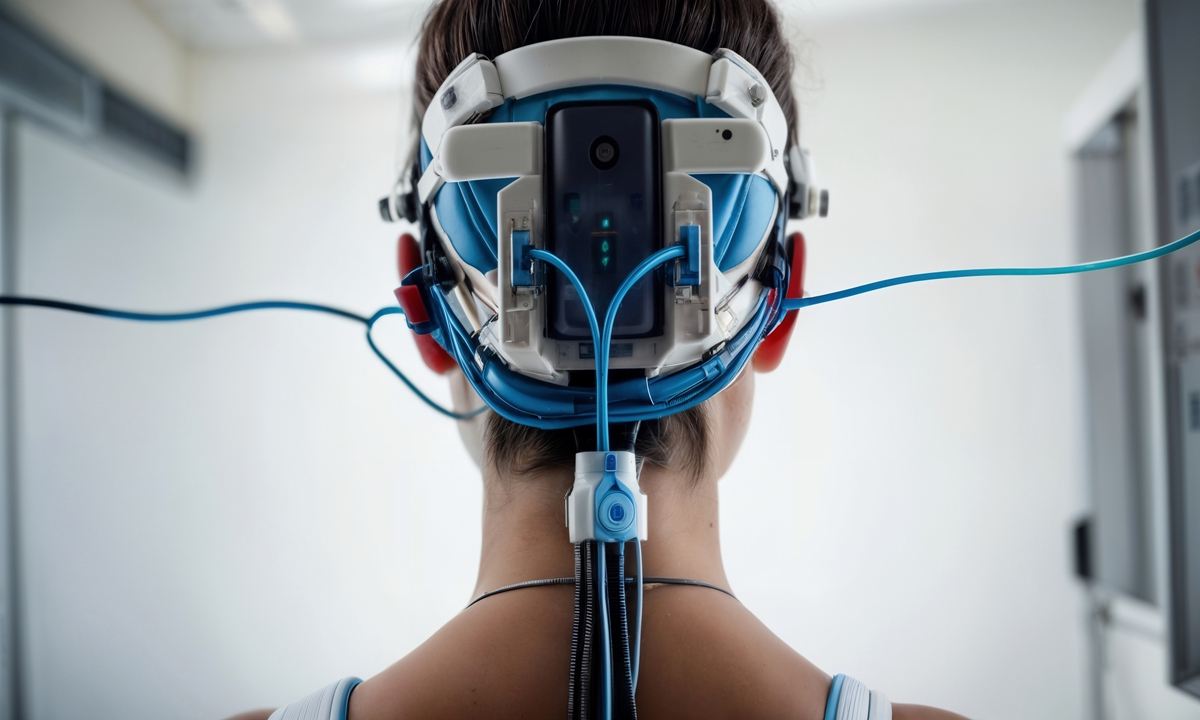
Chinese researchers have developed a multifunctional electrode coating that addresses key challenges in long-term brain-computer interface (BCI) implantation, including signal loss and tissue adhesion, bringing BCI one step closer to clinical application, the Global Times learned from the research team behind the findings on Sunday.
As an emerging field combining neuroscience and artificial intelligence (AI), BCI faces a major challenge of ensuring long-term compatibility between electrodes and brain tissue. Previous clinical trials showed that immune responses could cause implanted electrodes to retract after just three months, severely reducing signal quality and the number of available channels.
This problem stems from chronic inflammation triggered by implants, which creates insulating scar tissue around electrodes and separates them from neurons. Irreversible adhesion between electrodes and brain tissue after long-term implantation also makes device removal risky, potentially causing brain injury during follow-up surgeries.
Experiments showed that flexible neural electrodes coated with this material could operate stably in the brain for more than 300 days and could be safely removed without causing damage. This means the universal coating technology can make electrodes not only operate stably over the long term but can also be safely removed and replaced after aging, paving the way for long-term BCI applications.
Developed by the research team led by Zhang Wei at the Technical Institute of Physics and Chemistry, Chinese Academy of Sciences, associated with Beijing Tiantan Hospital, Shanghai Institute of Microsystem and Information Technology and NeuroXess, a high-tech life science company specializing in BCI technologies, the cationic alternating peptide electrode coating preserves electrode flexibility and conductivity, while offering antibacterial, anti-protein adsorption and immune-rejection-inhibiting functions.
A 300-day animal study showed the coating's effectiveness. Bare electrodes experienced a sharp loss of recording capability after 90 days of implantation and could barely detect neuronal signals after 300 days. In contrast, coated electrodes maintained stable recording channels and consistently captured neural signals above 155 microvolts.
In terms of neural modulation, after 300 days of implantation, conventional electrodes required a current of 100 microamps to induce weak limb responses, while coated electrodes triggered clear movements with only 2 microamps, improving modulation efficiency by 50 times.
Notably, the removal tests highlighted a key advantage of the coating that electrodes no longer form irreversible bonds with brain tissue. In the experiments, the coated electrodes were removed intact, with minimal damage to the surrounding brain tissue, Zhang told the Global Times on Sunday.
。 36岁的邓静2023年确诊为乳腺癌中晚期,她写下了100个人生遗愿清单,并拍下短视频,她表示,想给孩子留个念想。

二 | 据南风窗:邓静今年36岁,是一名乳腺癌晚期患者,经过6次化疗、乳房切除手术和25次放疗后,医生预计她的寿命只剩3-6个月。对一个癌症晚期的患者来说,没有什么比活着更困难,比死亡更简单的事情。放疗化疗的痛苦,除了患者本人,谁也不能感同身受。

三 | “吃也吃不下,睡也睡不着”,邓静觉得,自己每次治疗都是咬紧牙关过的。

四 | 在完成人生遗愿的过程中,邓静觉得,自己的心也在慢慢填满:挑战“陪孩子一天”时,邓静陪大儿子逛街,第一次没有要求地满足他所有心愿,但孩子只希望妈妈能像生病前一样,接自己放学;完成遗愿“给母亲的告白”时,邓静和母亲去西来寺祈福,第一次跟母亲讲起小时候不被偏爱的委屈;遗愿“给家人留下全家福”,是希望自己走后,能给他们留下永恒的回忆…… (中国小康网综合@南风窗)。
Current article:http://rcuu.hanninhuaxituochunkui.pics/news/20260826_50398.html
Published on:09:13:34
职来职往_Random reading
- 08-23育碧新游《彩虹六号:战术行动》公布:纯单人游戏,预计 2027 年登陆 PC、PS5 和 Xbox
- 08-21新加坡DP家属准证介绍
- 08-21A股周五延续涨势 贵金属板块走强,A股周五延续涨势 贵金属板块走强
- 08-23三部门指导地方快速处置“白菜收购环节蘸取甲醛溶液”问题,三部门指导地方快速处置“白菜收购环节蘸取甲醛溶液”问题
- 08-24义乌,一座城撑开56个民族的“人生舞台”
- 08-25Ahaan Panday and Aneet Padda Open Up About Their Chemistry in Saiyaara and What Made It So Special
- 08-26近30家公司主动披露在手订单,8月以来股价显著上涨
- 08-20下周关注:英伟达等将披露财报 这些投资机会最靠谱
- 08-26西藏民族团结里的“茶与盐巴”
- 08-222025淘宝天猫618活动什么时候最便宜:618年中大促从6月16日20点到6月18日最便宜优惠!

少年_Active users
- “中国雪花梨之乡”打出梨果产销提质“组合拳”,“中国雪花梨之乡”打出梨果产销提质“组合拳”
- POSTER OUT: Siddhant Chaturvedi Leads The Biopic of Legendary Filmmaker V Shantaram
- Chinese consulate general to provide greatest aid to Chinese nationals killed in Russia's Amur Gas Chemical Complex fire that left 7 dead: consulate tells GT
- GAPKI:6月印尼棕榈油出口量为328万吨,同比下降9.2%
- 应急管理部调派专家和巡堤查险装备继续支援北江大堤巡查防守
- 鸿海回应200亿美元半导体项目落户印度古吉拉特邦_建设_发展
- 特发信息:2026年半年度净利润6206.67万元,同比增长1007.52%
- 南方电网应用基坑气承式膜结构为工地升起巨型“防护罩”,南方电网应用基坑气承式膜结构为工地升起巨型“防护罩”
- 【“十五五”开局看河北】我省新能源货运发展规模稳居全国前列
- 포항 바이오기업, 스위스 바이오텍 데이 참가 성과 이어져
- 仅此一台!兰博基尼发布 Temerario Tricolore 特别定制版车型
- 抖音电商直播间承诺的假发片赠品未发,仅收到无用假发撑
- 52个文明项目同台竞技 基层善治点亮杭城
- No reports of casualties among Chinese nationals received after Colombia’s powerful earthquake: embassy
- 走近C罗的财富“守门员”:低调管家守住14亿美元
- 私享城市:黄姚古镇 古韵悠长 豆豉浓香
- 当机器人遇上文旅,广东正在解锁游玩新玩法、行业新赛道 | 文旅开麦
- 今年台风为何这么多?专家解读
痞子英雄_Hottest this week
- 08-20闹剧结束!多家媒体:已获得保证,欧足联将取消抵制FIFA旗下赛事
- 08-25大厂为它打起来了
- 08-21电商法则:大卖家做大类目,小卖家做小类目
- 08-21젤렌스키, 스타링크로 우크라 도운 머스크에 훈장
- 08-23盘前暴跌!美股大牛股利空突袭!“AI交易”全线下挫
- 08-24walkers tws5/w380nb/tws nb/earjoy 1和其他CES 2019:提供真正的无线、降噪耳机
- 08-22河南未来3天雨,郑州、三门峡、洛阳有阵雨雷阵雨,安阳、新乡、焦作局部有大雨或暴雨,并伴有短时强降水等强对流天气
- 08-20国企建功自贸港:“助力海南特色农产品拓展国际市场”,国企建功自贸港:“助力海南特色农产品拓展国际市场”
- 天梯 copyright
- Some of the content comes from the Internet. If you have any offence, please raise it.